


Tell us what you are dealing with and we will recommend a practical way to support your managers and your people.
Absence Management services that support your people and your business
Clinically objective, human case management for short and long-term sickness absence. Clear advice for managers, proper support for employees and a plan to get people back to work safely.
Two female employees meet to discuss absence management
Absence is a people issue first and a business issue second
Every workplace deals with sickness. The difficulty starts when absence becomes repeated or drawn out. Managers are unsure what they can ask, employees feel watched rather than supported, and nobody has a clear picture of what would help or when someone might return. Across the UK, an estimated 148.8 million working days were lost to sickness or injury in 2025, an average of 4.4 days for every worker.
Our absence management service gives you clinical clarity without losing the human side. A Kays occupational health specialist speaks to your employee, understands what is affecting their health and their work, and gives you practical advice on fitness, adjustments and likely timescales. People are treated as people, not numbers, and your business gets the information it needs to make fair, well-informed decisions.
What absence management with Kays gives you

Clarity for managers
Clear, practical advice on what an employee can do, what would help and when to review. No guesswork.

Support people trust
Sympathetic, clinically objective conversations, so employees feel supported rather than scrutinised.

Shorter, better-managed absence
Early expert input helps stop short absences becoming long ones and keeps long-term cases moving.

Decisions you can stand behind
Independent, documented advice supports fair, consistent decisions and the reasonable adjustments process.
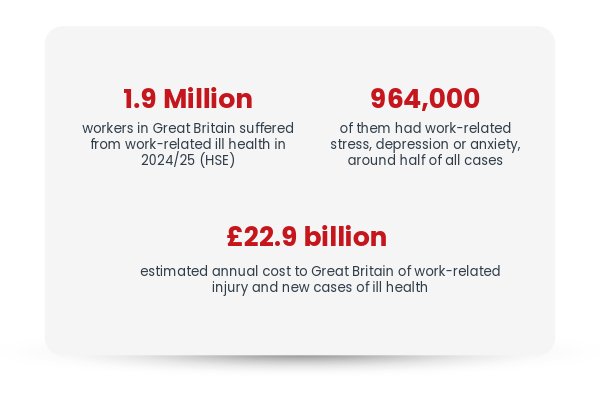
The real cost of unmanaged absence
Repeat or long-term absence costs more than the missing hours. Colleagues pick up extra work, morale dips, projects slip and managers spend time on difficult conversations they have not been trained for. Short-term patterns can point to an underlying health, workload or workplace issue. Long-term cases can drift without a plan.
Where an employee’s health condition may amount to a disability, you also have a duty to consider reasonable adjustments. Occupational health advice helps you do that properly.
A clear process for managers and employees
1. Refer
A manager sends us a referral and the questions they need answered.
2. Talk
We start with a telephone consultation, which is convenient for everyone and gets people seen sooner. A specialist talks with the employee about their health and their work.
3. Escelation
If a case needs more, we arrange a face-to-face appointment or a referral to an occupational health physician.
4. Clear advice
You receive practical advice on fitness for work, adjustments and timescales, and we review progress where needed.

Built for the people who manage absence day to day
- Line managers who are not HR or health specialists and want confident guidance
- HR teams handling a high volume of cases or complex long-term absence
- Multi-site and shift-based organisations that need a consistent approach
- Safety-critical workplaces where fitness for the role matters
We support employers across industries including manufacturing, chemical, oil, gas and offshore, facilities management and education.
Case management for every kind of absence
Repeated spells of sickness can signal an underlying issue. We help you understand whether health is a factor and what support or adjustments might help.
Structured support for people who have been off for an extended period, with advice on recovery, timescales, phased returns and adjustments.
Concerns about whether someone can safely and effectively do their job following sickness, an accident, a disability or a loss of capability.
Advice on whether an employee is well enough to attend meetings, hearings and reviews, and what support they may need.
Planning a safe, sustainable return, including adjusted duties and review points.
Support where work may be contributing to, or affected by, an employee’s health.
Absence rarely has a single cause, so support shouldn’t either
Confidential support for employees alongside case management.
Help where absence is linked to stress, anxiety or other mental health concerns.
Faster recovery from a common cause of absence.
Adjustments to workstations and roles that keep people in work.
Confirm someone is fit to return to safety-critical work.
Clear, fair assessment where a return to work is not possible.
Your questions, answered
Occupational health absence management helps employers understand how an employee’s health may be affecting their attendance or ability to work. A specialist assesses the situation and gives practical advice on support, adjustments and a return to work.
Typical triggers are a pattern of short-term absences, an absence that is lasting longer than expected, concerns about fitness for the role after illness or an accident, or when you need to know whether someone is well enough to take part in a management process. Referring earlier usually leads to better outcomes.
What is the difference between short-term and long-term absence management? Short-term management looks for patterns and underlying causes. Long-term management focuses on recovery, timescales, phased returns and adjustments. We support both.
You receive the advice you need to manage the case, such as fitness for work, adjustments and timescales. Clinical details stay confidential unless the employee consents to share them.
A management referral is a single assessment and report on a specific question. Absence management is ongoing case support across short and long-term absence, including review and return to work planning.
No. We provide independent clinical advice. Decisions about formal processes remain with the employer, and our advice helps you make them fairly.
Speak to an expert about absence in your business
Related services
We’ve helped businesses across the UK with their health surveillance using our nationwide Mobile Health Surveillance Units.
We understand how important your workforce is to your productivity and adhering to safety regulations. That’s why we support businesses across the UK to ensure all employees are fit to work.
Your employees are your most valuable resource, and now more than ever, you should support them with an Employee Assistance Programme (EAP).